Happy Earth Day from The Ranch at Rock Creek! This year marks 5 years since we eliminated single-use plastics, as well as another year dedicated to sustainable forestry and working with Trout Unlimited to install fish screens in our irrigation ditches. See our sustainability page for a full list of our initiatives, including our highway and river cleanups every April.
 The Ranch team cleaning up the highway leading to the Rock Creek Valley
Part of sustainability is creating a culture of noticing our impact on the environment and working to be better stewards of the land. While we tackle multi-year projects, we also work daily to inspire a future generation of children to look after the environment. Master Naturalist Classes and Flint’s Forest Rangers Kids Club help guests learn how the flora and fauna interact in our robust ecosystem. Meanwhile, at The Nest at Rock Creek, our onsite childcare program, Manager Cadgie Kruger and her team provide extensive outdoor education and activities that inspire kids to explore the hidden depths of nature on the ground, in the water and in the air.
The Nest at Rock Creek
Spending time outdoors has proven, enduring impacts on childhood development, academic learning, and environmental stewardship. They’re some of the guiding principles behind The Nest at Rock Creek, our education and exploration program designed for the children of our personnel. We’re proud to offer this program that allows parents to work at The Ranch while knowing their children are safe, entertained, and always learning about the world around them.
 The Nest watching the farrier at work in the barnyard
Manager Cadgie grew up in our hometown, Philipsburg. She later spent time living on a hobby farm in South Dakota. While raising her own three children and getting a degree in nursing with a focus on pediatric care, she felt the pull of the mountains. “I moved away just long enough to realize I longed for my family and life in the Montana mountains,” she said. After receiving her Child Development Associate, she combined her love of nature, agriculture and early childcare education by developing her own curriculum of nature-based education at The Nest. Cadgie shares some of her favorite outdoor activities in the hopes that The Ranch community can try them at home.
In the Water
Foraging for mushrooms and berries is commonplace in a state where morels and huckleberries demand top dollar at the local farmer’s market, but a “walk in the corndogs” with the kids, is one of her favorite ways to showcase a nutritious food growing right under our noses. Corndog grass is known as cattails in many locales.
 Cattails at Bikini Beach
This versatile plant is a source of food, weaving materials, wildlife nesting and more. Each season provides different uses for the forager.
Springtime Treat: Forage for little green shoots. Once harvested, we peel away the outer layers at the base of the cattail and expose the inner white core, which is slightly sweet, like a cucumber.
Summer Supplement: We shake those cattails to collect their pollen, which can be used in baking as a source of protein similar to bee pollen.
Fall Fluff: In autumn, the plant’s fluffy heads can be used for campfire tinder, as an insect repellent, and for stuffing pillows. Cattails are a perennial favorite for crafts and flower arrangements (be sure to spray with a clear lacquer to keep the fluff from making a mess indoors).
Winter Roots: while the plant’s roots can be baked, boiled, or roasted in winter. The roots also have sprouts that can be boiled and served as greens or used in salads.
If that wasn’t enough uses for the cattail, you may not know that the gel-like substance found near the base of the plant can be used as a natural antiseptic for wounds and even toothaches.
As with all things harvested from the wild, you need to be sure that what you are harvesting has not been sprayed or picked from an area of stagnant water. Know what you are harvesting, and be sure not to pick a hazardous look-alike iris! If your plant looks like a corndog or cigar, you have the right one.
On the Ground
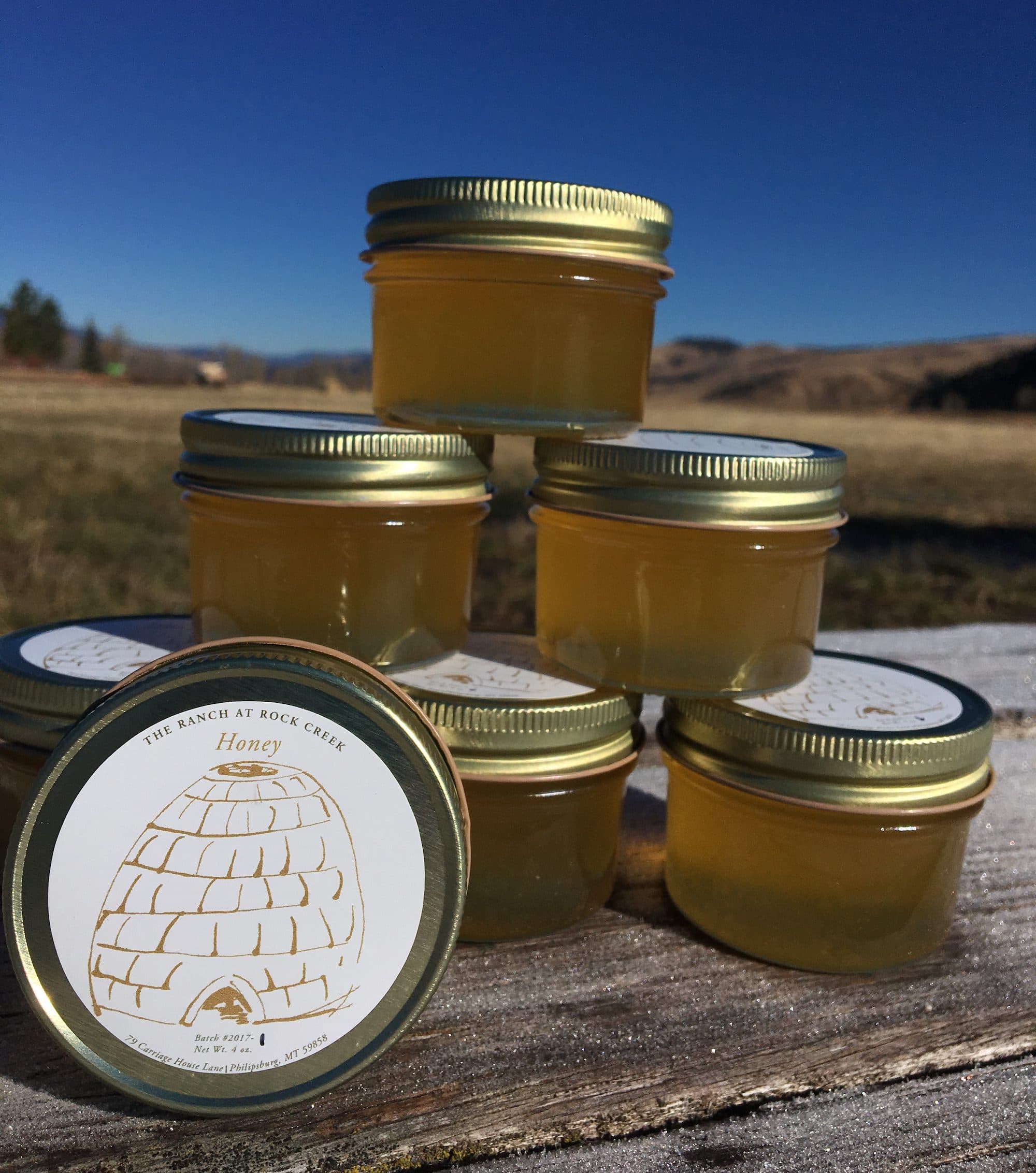
Beneath every rock and shrub exists a tiny world full of wonder for anyone unafraid of critters that crawl, jump, and fly. We keep bees on The Ranch to pollinate and produce honey for our kitchens. As Generation Alpha grows up, a simple walk in nature can spike curiosity and develop physical and emotional development. Spiders are an important species and the younger kids take an interest in their benefits to the natural world, the less likely they are to fear them.
 The red-backed jumping spider or Johnson jumping spider
The Johnson Jumping Spider is part of that family as well as a common arachnid in Montana. Family Salticidae contains more than 5,000 species and 500 genera, making them the largest family of spiders. With rare exceptions, jumping spiders do not build webs to snare prey, but spin webs on the ground for molting or hibernation. This non-venomous species has a black body with a red abdomen and teal mouth parts. Chances are if you flip over enough rocks or tree bark while exploring the hills, you’ll find one – or at least discover the remnants of their silken nests on the ground. (We recommend that you research any lookalike species in your area that could have similar markings before tracking down spiders in the wild.)

You can take this activity back into the classroom or living room to study the “Spidernaut.” A red-backed jumping spider named Nefertiti was sent to space for a 100-day microgravity experiment. She adapted, eating fruit flies while in space and returned to Earth without a scratch on her.
In the Sky
The Nest children make ornaments for our local nursing home during the holiday season, but they also love to surprise the birds with a homemade heart-shaped snack. Riparian or river areas represent just 2% of the landscape in the Western United States, but serve an essential function for the animals that call it home, especially the birds who migrate and nest here in the summer. During National Geographic’s Year of the Bird, we supported the UM Bird Ecology Lab both with donations and by hosting a bird banding program to study the species who use Rock Creek for nesting.
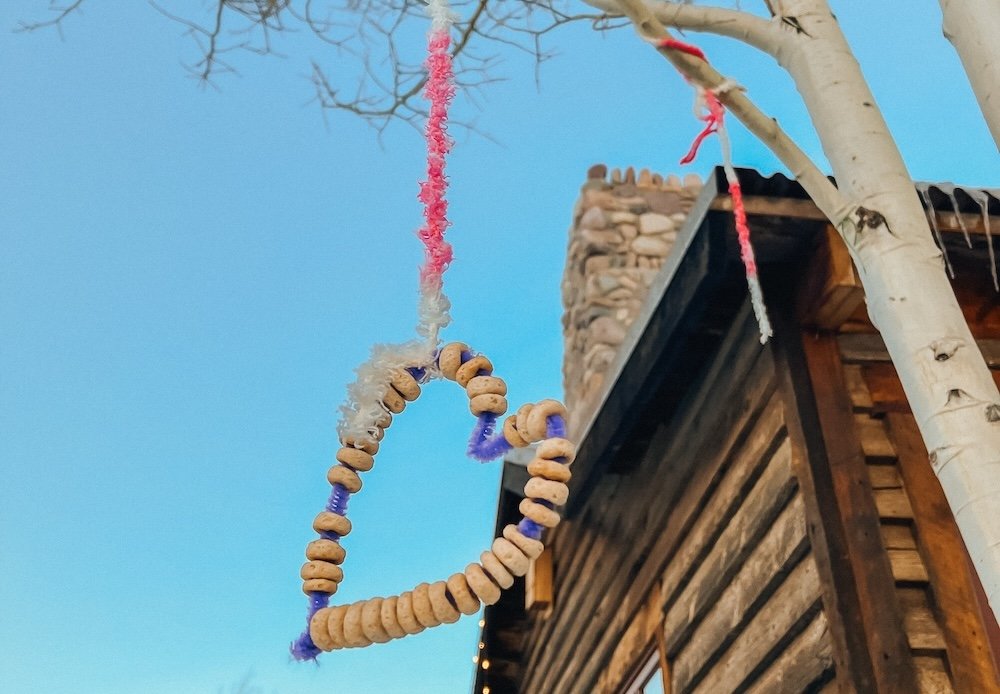 Cheerio ornaments for the birds
With just two ingredients, cheerios and pipe cleaners, kids can make heart-shaped ornaments to hang from trees. Birds should not consume excess sugars, so opt for the original 0-shaped recipes, rather than the higher sugar varieties. Take a single pipe cleaner and instruct kids to loop the Cheerios onto it. As they feed the birds, they also develop fine motor control. Twist the bottom together and shape into a heart before hanging with twine or yarn on a nearby tree.
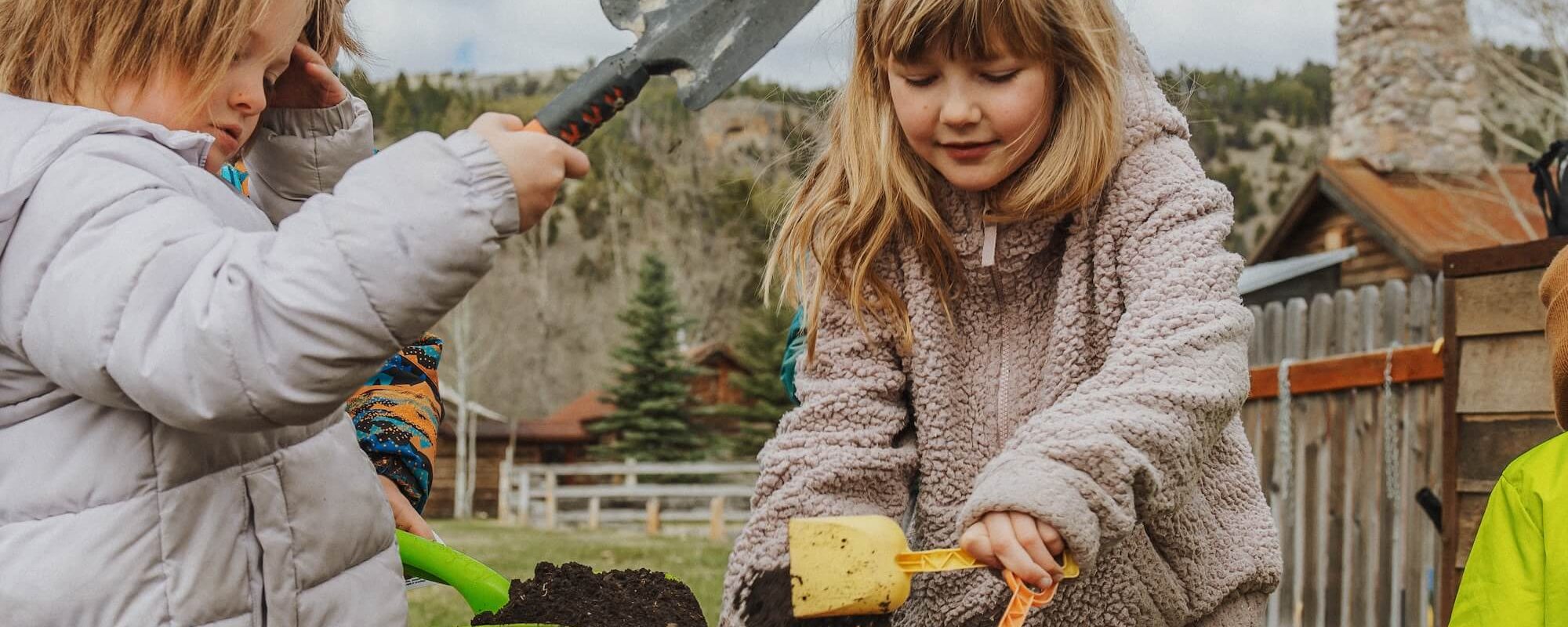
 Kids at The Nest planting wildflowers
Wildflower planting, tree planting and neighborhood cleanups teach kids how they can positively impact the environment in their area. Between outdoor adventures, Cadgie also looks for art projects with natural ingredients whenever possible. Find a homemade playdough recipe that has been passed down through the generations in our rural community. Kids can recreate their favorite plants and animals with this time-tested boredom buster.
Homemade Playdough
Ingredients:
1 cup flour
1 tbsp cream of tartar
1/2 cup salt
1 cup water
2 tablespoons vegetable oil
Food coloring
Instructions:
Mix all the ingredients together and cook over medium heat, stirring constantly. When the dough pulls away from the sides of the pan, remove from heat. Cool, knead and add food coloring. Use gloves to avoid colored hands. Both making the playdough and playing with it exercises small muscles and the imagination.
 The Nest at Rock Creek
About Cadgie

Cadgie Kruger is a Child Development Associate and a member of the NAEYC-National Association for the Education of Young Children. She also has a degree in nursing with a focus on pediatric care. Cadgie is currently working on her National Accreditation for Family Childcare. She volunteers on the board for the Food Bank of the Valley and helps with the local 4H club. Her passion is working with children and she is grateful to be doing so in Montana at The Ranch at Rock Creek. Cadgie loves spending time with her husband and three children doing all things outdoors – some favorites are hiking, fishing, camping and snowshoeing.